Cosmetic Equipment
The "Heart-Healthy" List: 6 Foods That Help Lower Blood Pressure Naturally
The "Heart-Healthy" List: 6 Foods That Help Lower Blood Pressure Naturally
Getting a high blood pressure reading is a silent, unnerving wake-up call, especially for US citizens. It’s a condition with no symptoms, but it’s a major risk factor for heart disease and stroke, which are the #1 killers in the United States. When your doctor gives you this news, it’s easy to feel anxious and overwhelmed, often assuming a future of bland, joyless food.
But what if the opposite were true? What if the most powerful way to fight back wasn't about deprivation, but about addition?
You have immense power to manage your blood pressure, and it starts on your plate. While medication is essential for many, a food-first approach is your most powerful tool for natural ways to lower blood pressure. This isn't a complex, restrictive "diet"; it's a simple, delicious list of foods that help lower blood pressure.
How Can Food Actually Lower Blood Pressure?
It's not magic; it’s biology. Your blood pressure is the force your blood exerts against the walls of your arteries. Certain foods contain specific, powerful compounds that address this in three key ways:
They Flush Out Sodium: Potassium is the "anti-sodium." It's a mineral that signals your kidneys to excrete excess sodium, which in turn helps your body release excess water, lowering the "volume" and pressure in your bloodstream.
They Relax and Widen Blood Vessels: Magnesium, Calcium, and Nitrates are "vasodilators." They send a signal to the smooth muscles lining your artery walls, telling them to relax and widen. A wider, more relaxed "hose" means less pressure.
They Reduce Inflammation: Omega-3s and Antioxidants fight chronic inflammation, which can make artery walls stiff and narrow over time.
The 6 Best Foods for High Blood Pressure
The 6 foods described below are the foundation of the doctor-recommended DASH diet foods (Dietary Approaches to Stop Hypertension).
1. Leafy Greens (The Potassium King)
(Spinach, Kale, Swiss Chard, Arugula)
Why They Work: These greens are the #1 source of the superstar mineral Potassium. A diet high in potassium is the most effective way to counteract the hypertensive effects of a high-sodium American diet.
The Science: By helping your kidneys flush out sodium, potassium-rich foods are one of the most direct and effective ways to manage your numbers. These greens are also packed with nitrates, which your body converts into nitric oxide, an essential compound that actively widens blood vessels.
How to Eat Them: A handful of spinach in your morning smoothie (you won't even taste it), a large salad for lunch, or wilted kale with garlic and olive oil at dinner.
2. Berries (The Antioxidant Powerhouse)
(Blueberries, Strawberries, Raspberries)
Why They Work: When it comes to foods that lower blood pressure, berries are packed with a powerful class of antioxidants called anthocyanins (which give them their deep red and blue colors).
The Science: Anthocyanins are believed to boost your body's production of nitric oxide (that "vasodilator" we just mentioned). One large study found that people with the highest intake of anthocyanins (primarily from blueberries) had a significant reduction in their risk of high blood pressure.
How to Eat Them: A cup a day, fresh or frozen (frozen is just as nutritious!), on your oatmeal, in yogurt, or as a snack.
3. Beets (The Nitrate Rocket-Fuel)
Why They Work: Among the natural ways to lower blood pressure, Beets are, ounce-for-ounce, one of the most potent sources of dietary nitrates on the planet.
The Science: When you consume beets (or beet juice), your body converts those nitrates into nitric oxide, which immediately relaxes and widens your blood vessels, leading to a measurable drop in blood pressure, often within hours.
How to Eat Them: Roasted beets are delicious in a salad with goat cheese. Or, for a more potent, immediate effect, a small glass of beet juice (just be aware, it can be high in sugar, so use it as a "supplement," not a main beverage).
4. Fatty Fish (The "Good Fat" & Inflammation-Fighter)
(Salmon, Mackerel, Sardines, Herring)
Why They Work: These Dash diet foods are the best source of Omega-3 fatty acids, which are famous for their heart-protective, anti-inflammatory properties.
The Science: While the effect is more modest than with nitrates, Omega-3s are believed to help lower blood pressure by reducing inflammation and preventing the stiffening of artery walls.
How to Eat Them: Aim for two 4-ounce servings per week. A simple baked salmon fillet with lemon and dill is a perfect heart-healthy meal.
5. Seeds (The "Magic Mineral" Trio)
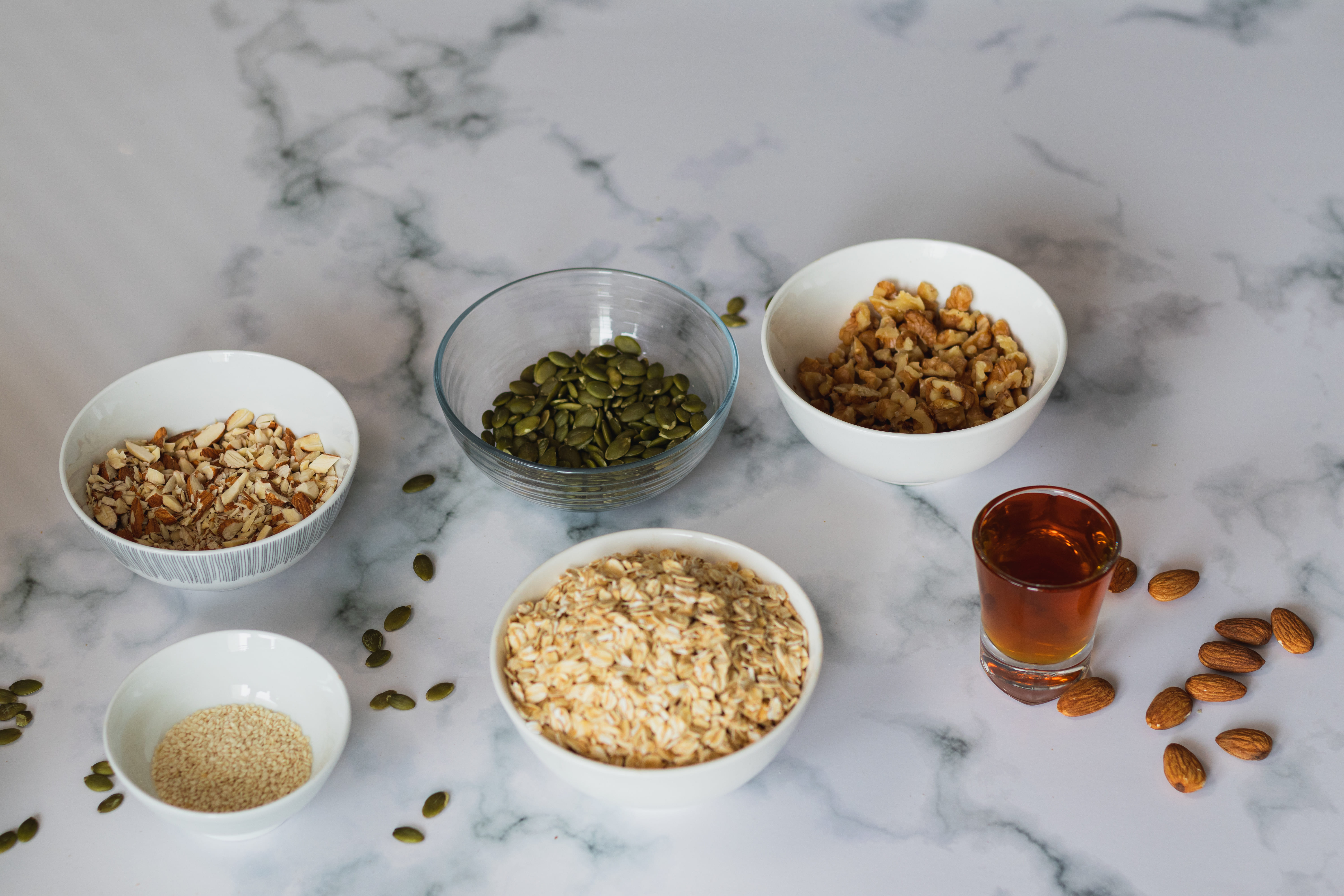
(Flaxseeds, Chia Seeds, and Pumpkin Seeds)
Why They Work: Seeds are tiny, nutrient-dense powerhouses that help to lower blood pressure. They are a "trio" of heart-healthy minerals: Potassium, Magnesium, and Calcium. Magnesium is especially critical, as many Americans are deficient in it, and it's essential for blood vessel relaxation.
The Science: Flaxseeds, in particular, have been studied for their ability to significantly lower blood pressure, thanks to their high fiber, Omega-3 (ALA), and lignan content.
How to Eat Them: This is the easiest one. Add 1-2 tablespoons of ground flaxseed (your body can't digest them whole) or chia seeds to your oatmeal, yogurt, or smoothie. Snack on a handful of pumpkin seeds.
6. Oats (The Fiber-Powered "Sponge")
Why They Work: Oats contain a special, powerful type of soluble fiber called beta-glucan.
The Science: Beta-glucan is a proven "multi-tasker" for heart health. It forms a gel in your gut that "soaks up" LDL (bad) cholesterol, but it has also been shown in multiple studies to have a modest but significant blood-pressure-lowering effect.
How to Eat Them: Start your day with a simple bowl of oatmeal. It's the ultimate heart-protective breakfast.
Conclusion
Your blood pressure reading is not a life sentence; it’s a call to action. You have the power to make a profound, positive change, and it starts with your next meal. You don't need to be perfect. You don't need to eat a boring, bland diet. You just need to start. This week, just pick one thing from this list. Add a handful of berries to your breakfast. Have a salmon fillet for dinner. This is the first, most powerful step in learning what to eat to lower your blood pressure levels, and you are more than capable of doing it.