Cosmetic Equipment
Dynamic vs. Static Stretching: What to Do Before and After Your Workout
Dynamic vs. Static Stretching: What to Do Before and After Your Workout
It’s one of the most common points of confusion in fitness. Should you stretch before you exercise or after? Or maybe the advice flipped: "Don't stretch! It's bad for you!" So, what’s the real answer? The truth is, both sides are right... and wrong. The confusion between dynamic vs. static stretching isn't about if you should stretch, but when and why.
Using the right stretch at the right time is the key to preventing injury, improving performance, and building a resilient body. Using the wrong one can actually rob you of your strength. This is the simple, definitive guide.
Dynamic vs Static Stretching: The Fundamental Difference
Think of your muscles like a rubber band:
A cold rubber band is stiff and brittle. If you pull it hard and fast, it might snap.
A warm rubber band is pliable and stretchy. Now, let's apply this.
What Is Static Stretching? (The "Hold")
This is the classic stretch you grew up with.
Definition: Stretching a muscle to its point of mild tension and holding that position for 20-60 seconds.
Example: Bending over to touch your toes and holding it.
The Goal: To increase passive flexibility and calm the nervous system.
The Mechanism: When you hold a stretch, you trigger a "relaxation response" (specifically, the Golgi Tendon Organ). This tells the muscle, "It's safe, you can let go," which allows it to lengthen.
When NOT to Perform Static Stretching: Before a Workout
This is the #1 mistake. Doing static stretches before you exercise can be counterproductive and even dangerous.
It Can Decrease Power: Remember that "relaxation response"? You are telling your muscles to "turn off" and relax right before you're about to ask them to be powerful, explosive, and strong. Studies have shown it can temporarily decrease strength and power output.
It Can Cause Injury: Stretching a "cold" muscle is like stretching that cold rubber band. Your tissues aren't prepared for it, which can lead to pulls or tears.
When to Practice Static Stretching: AFTER Your Workout
This is the perfect time for static stretching.
Your Muscles are Warm: Your muscles are "warm" and pliable, like that warm rubber band. They are ready to be lengthened safely.
It's a "Cool Down" Signal: It helps transition your body from a "fight-or-flight" (sympathetic) state to a "rest-and-digest" (parasympathetic) state, which is where your recovery and adaptation begin.
What Is Dynamic Stretching? (The "Movement")
This is the modern, science-backed warm-up.
Definition: Actively moving your muscles and joints through their full range of motion. It is stretching through movement.
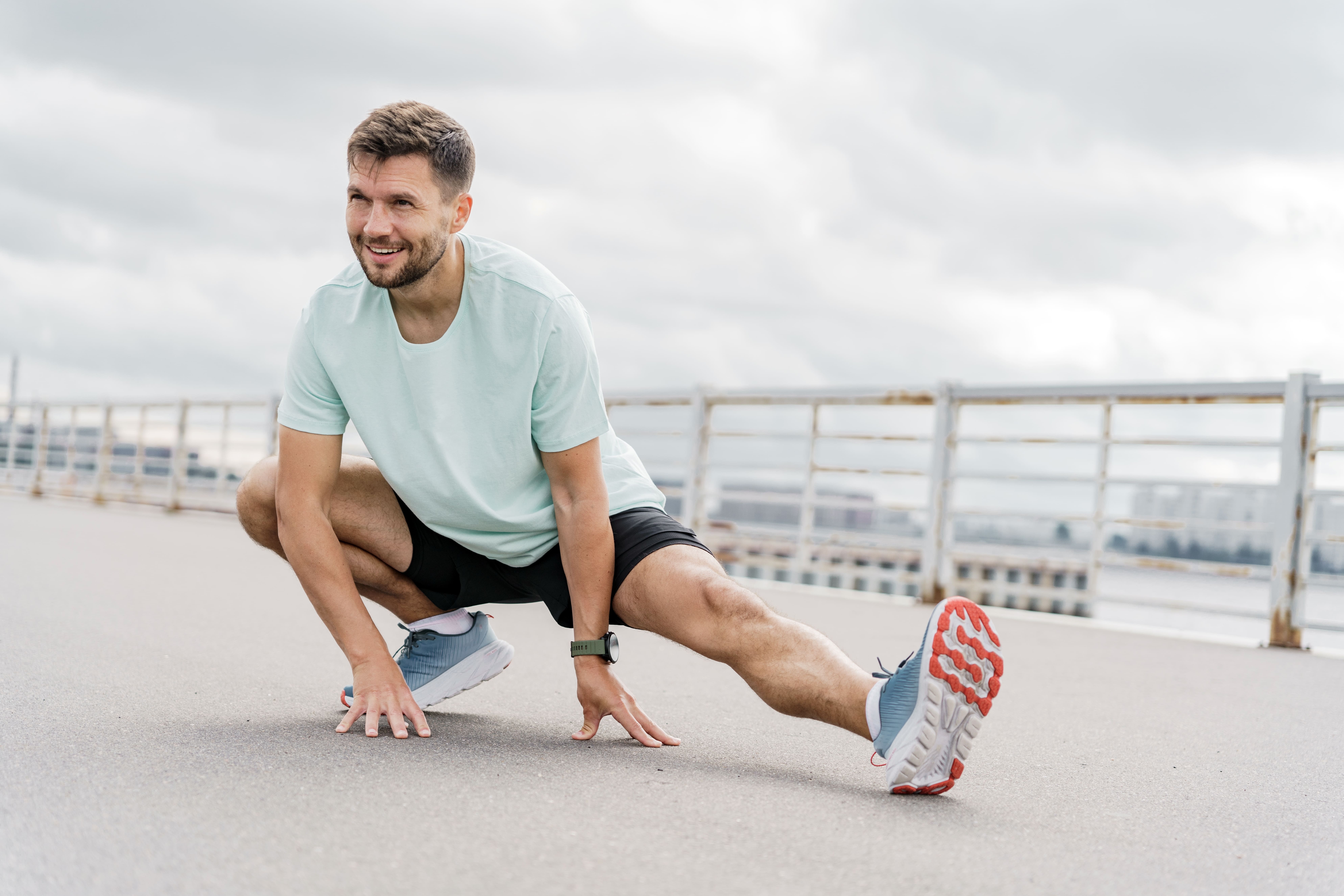
Example: Walking lunges with a twist, leg swings, or arm circles.
The Goal: To prepare the body for exercise and increase active range of motion.
The Mechanism: Dynamic stretching activates your muscles. It raises your core body temperature, increases blood flow and oxygen to the tissues, and "wakes up" your nervous system (your mind-muscle connection).
When to Perform Dynamic stretching: BEFORE Your Workout
This is your non-negotiable warm-up. It's a "rehearsal" for the movements you're about to perform. It tells your body, "Get ready, we're about to work." A 5-10 minute dynamic warm-up is proven to increase performance, improve mobility, and dramatically reduce your risk of injury.
The "How-To": A Simple Pre- and Post-Workout Routine
A 5-Minute DYNAMIC Warm-Up (Before Exercise) for beginners is illustrated below. However, it is advised to practice them in front of a trainer before you gain complete confidence.
Perform each move for 30-45 seconds.
Leg Swings (Forward/Back): Stand and hold onto a wall. Swing one leg forward and backward like a pendulum.
Leg Swings (Side-to-Side): Face the wall and swing one leg side-to-side in front of your body.
Walking Lunges with a Twist: Take a big step forward into a lunge, then gently twist your torso over your front leg.
High Knees & Butt Kicks: Do 20 seconds of each, jogging in place.
Arm Circles: Do 10 circles forward and 10 circles backward, gradually making them bigger.
Your 5-Minute STATIC Cool-Down (After Exercise)
Hold each stretch for 30 seconds. Do not bounce.
Hamstring Stretch: Sit on the floor, extend one leg, and gently fold over it, keeping your back flat.
Quad Stretch: Stand and pull your heel toward your glute, keeping your knees together.
Glute Stretch (Figure-Four): Lie on your back, cross one ankle over the opposite knee, and pull your knee toward your chest.
Chest Stretch (Doorway): Stand in a doorway and place your forearms on the frame. Step forward gently.
Child's Pose: Rest on the floor, hips back to your heels. Breathe deeply.
Final Thoughts
The takeaway is simple: Move before you work out, hold after you work out. This one change in your routine will make you stronger, safer, and more resilient.