Cosmetic Equipment
Benefits of Foam Rolling
Benefits of Foam Rolling
If you’ve spent any time in a gym, you’ve seen it: that cylindrical piece of foam, often relegated to a corner. And you’ve seen people on it, wincing in what looks like a special kind of agony. This is a foam roller, and the love-hate relationship people have with it is for a good reason: it’s one of the most beneficial, affordable, and accessible recovery tools you can own.
This practice is called self-myofascial release (SMR). It’s essentially a deep-tissue self-massage. Understanding the benefits of foam rolling and how to do it correctly is the key to reducing soreness, improving your movement, and keeping your body resilient.
What Is Fascia? (And Why Do You Need to "Release" It?)
Before you can understand myofascial release, you have to understand fascia.
Think of fascia as a dense, tough, 3D spider-web of connective tissue that wraps around, invests in, and separates every single part of your body. It’s the "sausage casing" around your individual muscles, your muscle groups, your bones, and your organs.
In a healthy state, this fascial web is supple and slides and glides smoothly. But due to:
Intense exercise
Poor posture (like sitting at a desk)
Lack of movement
Dehydration
The fascia can get "stuck," "gummed up," and dehydrated. This creates what we call "knots," adhesions, or trigger points. These are the spots that feel tight, sore, and restrict your movement. A "tight hamstring" is often not a short muscle; it's a stuck muscle, glued down by tight fascia.
The 5 Science-Backed Benefits of Foam Rolling
Foam rolling uses your own body weight to apply pressure to these adhesions, signaling your nervous system to "let go" and helping the tissue "unstick."
1. Dramatically Reduces Muscle Soreness (DOMS)
This is a prominent benefit of foam rolling and #1 reason most people do it. That "day-after-a-workout" pain is called Delayed Onset Muscle Soreness (DOMS). Studies show that foam rolling after a workout significantly reduces this soreness. The pressure acts like a sponge: it "wrings out" metabolic waste from the worked muscles and then allows new, fresh, nutrient-rich blood to flow in, speeding up the repair and recovery process.
2. Increases Your Range of Motion (ROM)
When your fascia is "stuck," it physically tethers your muscles, preventing them from moving freely. By rolling out a tight IT band or quad, you are "un-gluing" the tissue. This release allows your joints to move through their full, intended range of motion, which means a deeper squat, a more-free-running stride, and less "pinching."
3. Corrects Muscle Imbalances
Foam rolling is a key tool for fixing bad posture. For example, in "desk posture," your chest and hip flexors get chronically tight. This "shuts off" your glutes and upper back, making them weak. Foam rolling the tight muscles (your chest and hips) allows the weak muscles (your glutes and back) to "wake up" and fire properly, restoring balance to your body.
4. Prevents Common Injuries
Most non-contact injuries are caused by these exact imbalances and tight spots. A tight IT band can pull on the knee, causing "runner's knee." Tight glutes can contribute to low back pain. By proactively finding and releasing these "hot spots," you are doing daily maintenance that can prevent a small tightness from becoming a major injury.
5. It's an Accessible 24/7 Massage
A professional deep-tissue massage is fantastic, but it's also expensive and inconvenient. A foam roller is a one-time, $20 purchase that allows you to get many of the same benefits, on your own schedule, in your own living room.
How to Foam Roll: Exact Steps Outlined
This is not a race. The biggest mistake is rolling too fast.
The Golden Rules of foam rolling include:
Go Slow: You must move slowly, about one inch per second. This gives your nervous system time to adapt and release the muscle.
Find It, Hold It: When you find an especially tender spot (a trigger point), STOP rolling. Rest your weight on that spot for 20-30 seconds. You will feel it start to "melt" or release.
Breathe: You must breathe deeply. Holding your breath tenses your muscles, which is the opposite of what you want.
Avoid Joints & Your Low Back: Never roll directly on a joint (like your knee). And critically, do not roll your lower back. Your upper/mid-back is supported by a rib cage. Your lower back is not, and rolling it can put dangerous pressure on your lumbar spine.
5 Beginner Moves to Start
1. Calves: Sit on the floor with the roller under your calf. Put your other foot on the floor for support. Lift your hips and slowly roll from your ankle to just below your knee.
2. Hamstrings: Sit with the roller under your hamstrings. Lift your hips and roll from the back of your knee to the base of your glutes.
3. Glutes: Sit on the roller. Cross one ankle over the opposite knee (a "Figure Four" shape). Gently tilt your weight onto the glute of the crossed leg and roll.
4. Quads (Front Thighs): Lie on your stomach in a plank position with the roller under your quads. Roll from just above your knee to the top of your hip.
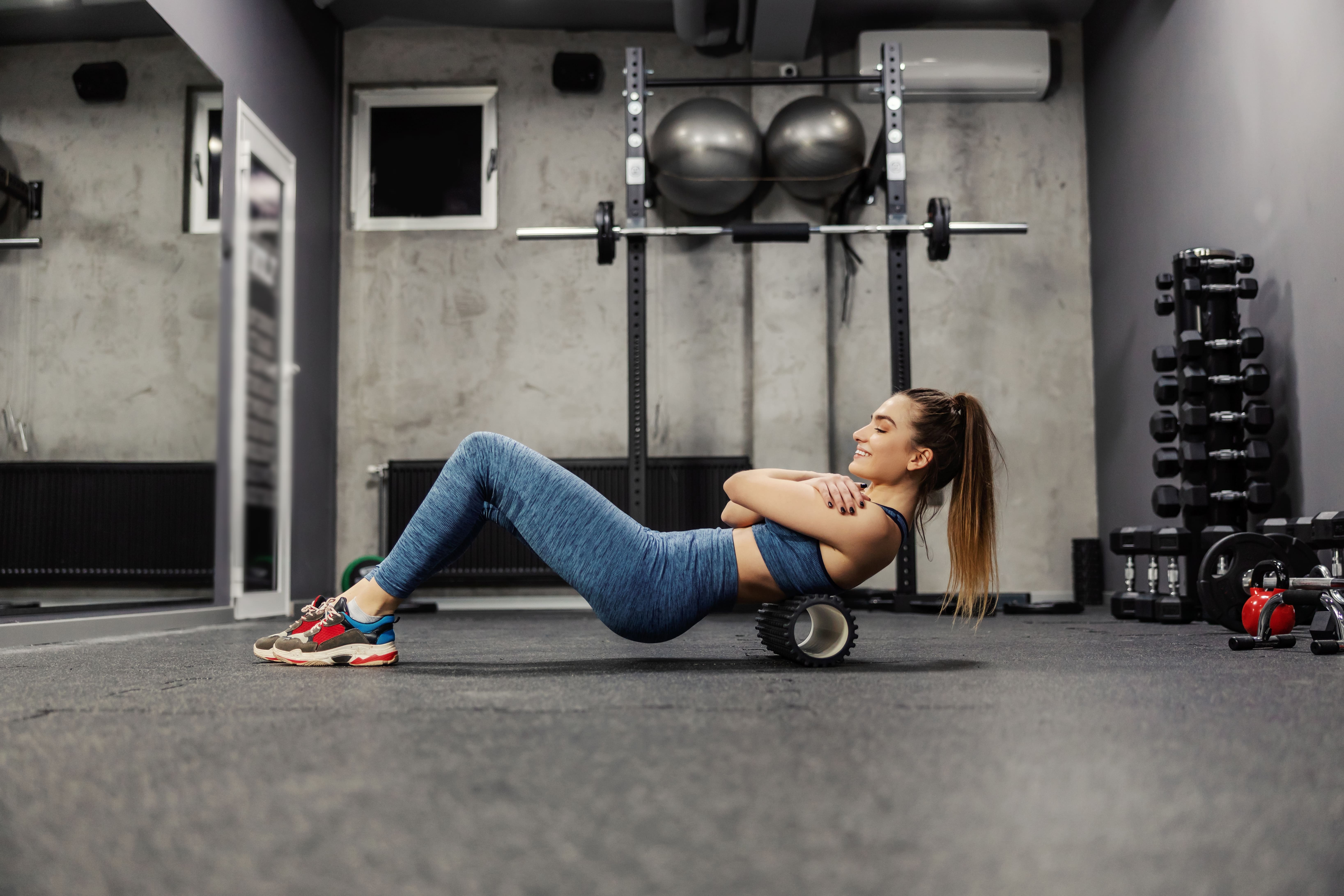
5. Thoracic Spine (Upper/Mid-Back): Lie on your back with the roller under your shoulder blades, hands behind your head to support your neck, and feet flat on the floor. Lift your hips and slowly roll from your mid-back to the top of your shoulders.
Final Thoughts
You don't need to do this for an hour. Just 5-10 minutes after your workout or before bed is enough to make a massive difference. Recovery is not passive; it's an active process.